 I belong to a lot of online communities, among them groups for writers, groups for artists, and groups for spiritual seekers. I mention these three because they come together in a hybrid practice of seeking deeper relationship with the Divine as we each know it, through creative expression.
Like other communities (both online and off) dealing with endeavors in creative and intellectual spirituality, there are sometimes concerns over cultural appropriation. Those advocating against dipping into and borrowing from culture practices not your own, encourage seekers to dig down and find their own roots, find the traditions of their heritage and culture, and practice in alignment. To do otherwise causes harm to cultures that have been historically oppressed and/or enslaved, suffered cultural genocide and/or are disadvantaged in a marketplace where white European descendants are more favored and white privilege gives advantages non-whites do not enjoy.
If you want to better understand cultural appropriation with good examples , read Pulitzer Prize Winning author’s, Viet Thanh Nguyen, Arguments Over The Appropriation of Culture Have Deep Roots.
As might be expected, there is room for disagreement and misunderstanding at every level. What exactly is appropriation? How does it cause harm? What about freedom to practice the religion or spirituality of my choice?
One example, that of Indigenous Americans’ ritual of smudging, has been talked about in every group community I belong to (note that burning herbs and incense to purify person, spirit or space is found in many cultures from ancient times to modern).
In popular culture, we think of smudging as burning sage in an abalone shell, using an eagle feather to move the smoke. But there is much more to the Native American practice of purification, including the use of not only sage, but sweetgrass, tobacco and cedar for different purposes.
If you are not of Native American bloodlines, or were not specifically taught the practice by a Native American, it is considered appropriation to smudge in this fashion. To do so without understanding the deeper meanings and various uses does not honor the practice. Widespread practice without proper knowledge dilutes the deeper meaning. Appropriating and sharing the practice as a teacher or facilitator, even writing about it results in profit or gain, whether financially or simply by building credentials.
I will disclose here that I have Native American (matrilineal) bloodline, Ojibwe. Though not a percentage sufficient to be enrolled in a tribe, I have been taught by a tribal member how to smudge and gifted the tools to do so. Still, what does it matter if I make that declaration? I can’t prove it. I don’t carry around a gold edge certificate stating I received the right instruction, or that I was named by an elder and welcomed by the community, nor that I participate in spiritual ceremony with them. I can’t credit my indigenous mentors when I perform the ceremony (as is often suggested) because they are private people, they don’t want their names bandied about social media or in public. Even if I were to give names of teachers, few people outside the tribal community would know who they are.
I don’t look Ojibwe. If I’m smudging outside of my personal practice and I’m questioned about appropriation, I can answer honestly that I followed the respectful path. But, so can anybody who hasn’t followed a respectful path—how is it to be proved or disproved?
Unless we want to go so far as saying that cultural practices shall only be performed by those that are obviously (visibly) of said culture as to not question their heritage, there is no way to regulate it. I don’t think anybody wants to travel down the slippery slope of entitlement or restriction per cultural identity.
This is just one example of the a chasm of ambiguity that troubles me. Any online group or community can urge right practice, they can urge refraining from cultural appropriation, teachers and facilitators can lead by example, but when compliance depends on making assumptions about another’s cultural heritage, how do we rightly proceed? Will those of us putting ourselves out there as mentors, teachers, and leaders all wear armbands issued from some authority designating what we may and may not practice?

The thing is, there are no cultural or spirituality police in this country or within the online community—at least not any with actual authority for enforcement. Nobody is going to come break down my door and confiscate all of my herbs, my sage or incense, crystals, prayer beads, or rosaries. It won’t happen even if I’m teaching others. The choice not to engage in cultural misappropriation is entirely individual and depends entirely on the honor system—and enforcement (even attempted) is in direct opposition to honor.
As it stands now, within the online community, public conversations among and about teachers and facilitators who fall short of the desired standards in enforcing right cultural practice, often become heated, burning with accusation, demands that offender apologize and indignant flouncing.
Followers and students often have front row seats to the facilitator wars. Not good. It’s like sitting in the faculty lounge watching administration and teachers in a heated battle over classroom policy. As an online student, I have witnessed while one faction of self appointed cultural police have so harangued another over the title an imagery used in her marketing material, that she was forced to take the course down, even after making changes and apologizing.
The woman in question makes her living offering online classes and workshops, and was effectively hamstrung by her competitors, in the name of right practice. I am left wondering what is right about that?
In the example of smudging, I’ve seen many students sickened with shame and fear that they are doing something wrong if they practice cross cultural rituals in the privacy of their own home. Others are angered by what feels a whole lot like policing of the faith-based practices in which they can and cannot engage.
Teachers and facilitators, even thought leaders and bloggers, have an obligation to their students and followers and should take care to tread lightly in the territory of personal values and standards. The challenge is drawing clear lines between encouraging right practice among peers, and imposing personal values on impressionable students and followers.
Likewise, those offering their knowledge and skills must take care they don’t fall under the spell of their own hubris; honestly there is no way to prove right or wrong in these issues and teachers who claim to know the only right way in matters as ambiguous as personal values are treading into troubled waters. Again using cultural appropriation as an example, how do we know that the increasing emphasis on bloodline entitlement, isn’t going to lead to even deeper division, harassment, and increasingly violent spaces?
Even beyond values and right practice, in seeking to learn the pre-Christian spiritual practices of our ancestors, who of us knows the entirety of our cultural roots? My 95 year old patriarchal Auntie just received her DNA profile. There is only a small sliver of her pie that is not South Central European—and she knows her mother and father came to the U.S. from the same village in Yugoslavia. But you need only read the history of the multiple invasions of Slavic people throughout the centuries, or for that matter look at my own daughter and a nephew, who are often mistaken to be of Middle Eastern heritage, or my cousin with her very almond eyes, to realize Balkan people carry a rich mix of ancestry from East of their historical borders.
Further, my patriarchal name, though likely a boggled Americanization of something more Slavic, hints at an Irishman in the mix. Even if Auntie’s DNA seems to disprove this, who knows for sure? One contribution of Irish DNA several generations back, would become pretty watered down in all that Slavic blood. Yet, like my daughter, nephew and cousins who are visual throwbacks to ancient ancestors, could there not be spiritual throw backs as well? A family member unexplainably drawn to Celtic tradition?
Additionally, we must consider the incidence of non-biological children by adoption, and those by donor eggs or sperm. While were at it, lets not forget children born of secret liaisons and, yes, rape. It would seem, then, that if we are strongly attracted to a spiritual practice we have no apparent connection to, there may be (so called) good reason for it and we should be left to follow what our gut, or blood, is telling us.
I would be remiss if I didn’t point out that there is a certain irony in all of this; spiritual seekers are generally quite accepting of the ideas of collective consciousness, Akashic records and even reincarnation, you’d think they’d also be accepting of being drawn to a cultural practice otherwise unrelated to present characteristics.
And let’s not discount the power of capitalism to influence the American Gestalt. We are experiencing a shift of consciousness, falling under the thrall of yet another feat of marketing magic. Test your DNA, find out who you really are! Trade in your lederhosen for a kilt. It seems we have gone from holding unity as an ideal, to becoming the much more interesting, flag bearing embodiment of our separate cultures. I suggest proceeding with caution. Go ahead and test your DNA if you’re curious, but not to use as a weapon in the war over who gets to rightfully smoke a peace pipe, or play a bagpipe.
If you are an online teacher, facilitator or thought leader working hard to establish and maintain an ethical standard among your peers, I respect and appreciate that, but please, don’t overlook the potential pitfalls. And please stop soft selling what is a very militant movement by saying people are being called in, not out. It may start as a call into the fold, but as soon as there is non-compliance, it quickly becomes a calling out and sometimes a tearing down —own that, don’t neutralize it to make yourself feel better about what you’re doing.
When engaged in a controversial topic, stop counting those likes on your comments—accept that being in the majority on social media posts might represent a false endorsement, because those who don’t agree are either afraid to speak up or have simply grown weary of being dismissed out of hand and just scroll on by.
Admit that you are using your loud voice (because we all know what a loud voice is online even without the shouty caps), and that doing so along with with the many other loud voices of dogged insistence comes across as intimidation, regardless of the intention—own that, too. Do not soften it by calling it educating. I wouldn’t stand for an educator treating any student that way in a brick and mortar classroom.
If you, or others you know offer sound advice and information in the comments of social media posts, please refrain from later declaring that some people deserve to be paid via their Patreon or other similar monetizing sites for their contribution to the conversation. I have been a consultant in the business world. Would that I could drop facts and helpful information on people, completely unsolicited, and then send them a bill for payment.
This is not to say those who are offering insights don’t have valuable information worth monetary compensation, but perhaps a more professional approach would better serve their cause and their credibility. “I believe I have some helpful information. Here’s a link to my site with info on my experience and credentials, my hourly fees, and a payment link. If (X-number) of donations are made (or X-dolllar amount reached) I will join in the conversation.” Barring that, understand that any advice given is given freely. If he conversation doesn’t go your way and the game is no longer fun, you can’t demand payment for your ball before taking it home.
And can I just say, if you are an expert working in your field, you should be too busy actually working to spend a day repeatedly commenting on social media.
Not that giving a tip, or buying a coffee should be off the table, we can all use the little extra income. Likewise there is a better way to encourage others to do the same—“Hey, peeps. I was recently in a discussion where (name) dropped some real pearls of wisdom on us and I’m visiting (site) to buy her a a cup of coffee.”
Finally, if you are taking it upon yourself to facilitate groups, please understand the weight of your responsibility regarding impressionable students and followers. Consider providing a concise, written/downloadable/printable statement, easily accessible in your marketing materials and also provided by email at course sign-up, listing your values, standards, and expectations in your online classrooms. Consider directing students to a well written, easily digested explanation of cultural appropriation (and anything else of import). Encourage them to do their own work, inform themselves and make their own decisions on right practice.
When debate arises within your own community of leaders and facilitators, please do not carry it over into your instructional spaces. If you feel you must make a statement, because you previously endorsed an individual or program you no longer wish to recommend, keep it simple—”I am no longer endorsing (teacher/program) because she doesn’t align with my values regarding (xyz).” Refer students and others with questions back to your provided statement of values and standards, and remind them that they have to do their own work and arrive at their own decisions.
Finally, given the room for so many unknowns in cultural heritage, please consider the fact that as altruistic and ardent as you may be in the cause, there is a huge potential for turning your passion into a bully pulpit, regardless of all good intention. Understand that we are all on individual journeys to spiritual fulfillment, and there are many different points along the way, some of us are more ready for the hard work than others. Each of us should have a wide array of online class choices to meet our current need when we are paying for personal enrichment.
Remember, when the student is ready, the teacher will appear. Your students will find you and you them.
As for myself, I stand firm in my conviction that past harm is not a carte blanche excuse for creating more of the same. Today’s bloodline entitlement is tomorrow’s discrimination. If all we manage to change is which culture or group is being oppressed or restricted in their choices, then there is no change at all. It is not progress and it is not healing
* * * * * *
Comments for this post are disabled—not because I’m avoiding dissenting opinions, nor did I write this for any ego boost derived from “likes” and positive comments. I’m not allowing comments because I don’t want this to become another showcase for the problematic behaviors that concern me.
I also want to thank those who have informed my understanding of cultural appropriation thus far (there is always more to learn), and those whose ethics classes gave me solid foundations, but I’m not going to name any—you know who you are, you are doing your work and you are encouraging and allowing me to do mine.

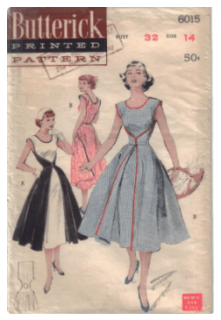 pounds off a pleasingly plump body when done in two tones like the black and white illustrated.

 madgoddess.com